Blog Description

The development of an artist, who seeks to make the world an inspiring and beautiful place through the gift of music.

Monday, April 30, 2018

A Dear John Letter to Pro Tools

Dear Pro Tools,

    Well, I wish I could say it's been fun, but honestly, you've been a thorn in my side since we started this cantankerous romance.

    The money I've spent on plugins and upgrades - Thousands of $$$$. The headaches I've had with losing the use of plugins due to switches in file format (vst to aax, etc...), or frustration from just not knowing how to deal with things like compression, dynamics - And YOU were no help! The confusion, the days lost, the ups, the downs. It was a love affair gone wrong! 


So, goodbye Pro Tools! I'm breaking up with you! 



   You see, I've met someone else. 

Yes, you may say that they're not as great as you. You may say that they only work on one operating system, and that's ok, because it just happens to be the one I use. 

And you may say, that they can't fulfill my needs with score writing and composition. Yes, there may be a learning curve and I may just keep your brother, Sibelius, for he has always been a more intuitive, gentler friend. However, I'm confident that eventually, that too will not be a mystery and that together this new program and I will be happy.

 Who is it? Who has stolen me from you? Well, it just happens to be Apple's own Logic Pro X


At a fraction of the cost of you, Pro Tools, I get:

  • Mixing Plugins
  • Realistic Midi instruments (including excellent drum sets - no need for EZ Drummer or other 3rd party costly plugins)
  • Free updates
  • User friendly interface
We fell madly in love while I watched composers using it to create beautiful scores for film about 3 years ago. Then, my brother bought me the lighter version last year (many thanks big bro!). 

Now, I had set myself into a quiet complacency with you after figuring out all your traps and nuances. Your hidden features and confusing guides. But, after I found out that you would be charging me $300 to upgrade you yet again! I put my foot down! How DARE you! You POMPOUS, OVERINFLATED, PRIG!!

And so, let us let bygones be bygones. Let us not look back with anger and discontented ruminations, but remember the good times (of which there were very few) and consider what we have learned from each other. 

So get lost Pro Tools!!!... I have found a new love.



With Regrets, 
(for having wasted so much of my life on you)

Amy

PS - I've already written a song in Logic Pro X and it sounds so goooood!

Monday, July 17, 2017

Midi Instrumentation - As Real As It Gets

I tend to struggle with midi instruments vs. live. The pros and cons of both tend to make the situation somewhat frustrating.

Live Instruments:
  • While you can easily have the sound you want with a live instrument, you can't control how the instrumentalist will interpret your work, even if you do spell everything out for them prior to the recording session. 
  • There's payment involved with live musicians... But don't get me wrong, I'm all for supporting my fellow musicians, I just have spent a lot on these midi patches and would like them to be what they promise.

Midi Instruments:
  • Complete control, but they don't always sound real - Even with the best midi patches. 
  • Expensive for good ones.
  • Can be difficult to control.

So, where does that leave us? 

While we could just live with the presets of the midi controls and not worry about the best sounds for our midi devices, if we want the best sounds they can produce, we'll need to read the instructions and play with it.

Like getting directions from a Albanian cabbie, 
this is can be confusing depending on the company you get your patches from.


Now, I'm not an expert yet, but I do want to show you what I've learned and hopefully help you to gain some perspective on your midi instruments.

I'm going to attempt to explain the UVI Instruments to you and how to use them. If you have the UVI suite, download this image, it will help you make sense of it.

Take special note of #9. They don't tell you this, but this area controls much of the other areas on the same board. For example, "Pitch" controls how much of #8 gets thrown into your mix. "Filter" takes care of #6 LFO and the 4 different filters that can be assigned. 

Currently, I'm working on a Alto Sax part that is kinda kicking my butt. I need it to sound as authentic as possible. Here's a recording of an alto sax to use as a reference. 


It also has some slides, but I'm having a hard time making it sound real. Getting closer all the time though. 

To help navigate the UVI suite, here's a video I made to help you make sense of the interface.


As you can see, it's not as cut and dry as the handout they give you in the guide.

In the next episode:
"How to Tweak Midi Instruments"


Looking at the individual parts -> working with volume, velocity, breath control, etc...
STAY TUNED!!!

Anyway, here's a cut of the song that I recorded. Love to hear your feedback! Is it catchy? Do you love it? Why? Dislike it? Why? Let me know! 


As always, I hope you're creating, making, be amazing in your own way! Be inspired! Be creative! 

KEEP MOVING FORWARD!!!

TTFN,
Amy

Friday, July 7, 2017

Script Re-Re-ReWrites

Have you ever tried to start an engine that doesn't want to go?
Or worse, you have engine power, but are stuck?


GAAAAAAAH!!!!

It's like you're revving an engine and getting nowhere!

LOL! 

Well, I know this feeling so well, because I'm in the middle of REWRITES!!! 


So, to help you and me remember how to break free, I thought I'd write down some things we can do to get out of this horrible, treacherous, predicament.

How to Break Free and Move Forward


  1.  Get someone else to look at your work.
     Good, bad, or indifferent, having that extra mind/eyes looking at your work will help you revisualize what's working and what isn't -- even if they don't point it out to you.
  2.  Get Away From PEOPLE and distractions.
    Hey, I love my family. You love yours. But the creative process is not conducive to CONSTANT INTERRUPTIONS.
  3. Enter the Dragon 
    Put on your Grr face. Buckle down and just do it. Slog through no matter what the aftermath. BUT, keep a copy of the original just in case your rewrites turn out disastrous. Even if they do though, it's worth it to go ahead and push through this blockade... Could be the key to your masterpiece.
  4. Consider a Break
    To know more, Follow this link: When to Step Away From Your Work.  As this is the absolute opposite of where you want to go, sometimes it is necessary to stop for a bit and smell the roses so you can be more productive later.
  5. Do the Dishes
    This may be considered a break, but I find that I am most productive when I do this one menial task. It allows my mind to wander and gets in touch with the more creative side of me. And if it is a break, it's a very short one.
  6. Listen/Read/Look at someone else's work
    Ideas can spark from looking at another creative master. It may be something that kicks you in the right place. So try it!
  7. Finally, Watch THIS:

As Always.... KEEP MOVING!
Amy


Saturday, July 1, 2017

The Greatest Liar In Your Toolbox

There is a deceiver in our midst. 


A shadowy figure that lurks at the ready to throw off your guard. It's nefarious. It's fiendish. It is cruel... It will have you crying... Yes, crying! Even you, the guy with the heavy metal background and thousands of tattoos! I see you back there! You will ball like a little baby after it is through with you. A Big, Harry, Tattoed, Heavy Metal Man-baby!!!


Where is it? In your stereos. Your car, your home, your boom box... And it's name is Bass Boost. 


You may say, "Ppphhttt! HA-HA! Is that what you're talking about?!? That's stupid! I know about Bass Boost. You just shut it off."

 BUT, did you know that sometimes it goes by other names? Or sometimes, there is no name, it just is automatically embedded in some systems and you have to physically counter act it in order to hear a true mix? 

For example, on my expensive home stereo, it's called "Night". So the last mix you heard of mine, Can't Say No, you might have thought it was thin, or tinny. That's because the studio monitors were telling me good things, but when I'd listen on my stereo, the Night feature was on - so it boosted the bass. This caused me to do at least 30+ mixes trying to get rid of the boomy bass. *Sigh* So aggravating. 


Another time the gremlin struck was with my last album.  My car stereo doesn't have a bass boost, but is so bass heavy!  After mixing, I went out to the car excited to listen to all the music I had worked so hard on, only to be put to tears because of how boomy the bass was. I was devastated and basically destroyed my work trying to get it to sound correct in my car stereo. It wasn't until later that I realized what happened. 


This is a huge issue for anyone trying to mix/master their own work.
  Most of us like to listen to our pieces on several different devices/systems to hear what it will be like for our patrons. So please, be aware of this sinister prankster


***  Make sure to use a reference track not only in your mixing, but on the other places you listen to your finalized mix.    ***


It will make a world of difference.  I have learned my lesson. 

Don't let this, or anything else stop you from making music. You can do it. 

Dream Big. Move Mountains.

Amy

Tuesday, June 6, 2017

New Gear... The Roller Coaster

Getting new gear is like a roller coaster ride. It's like Oooo... and Ah... Sometimes scary. Sometimes harry. And sometimes a great thrill.

Fun, Roller Coaster, Legoland, Denmark

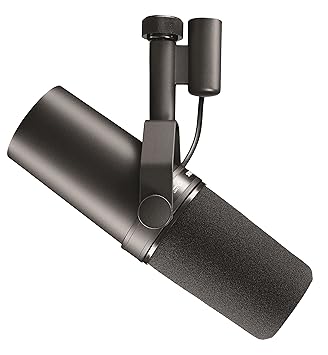
Recently I updated my mic to a Shure sm7b. A really great studio mic. The salesman told me about 3 times how Michael Jackson used it to record thriller. Oooo.... Ah.... I also had to get a Cloud Lifter in order for my little set up to be able to handle the new mic.
Yup. It's pretty sweet. I've already used it a little bit to play around.

That spurred me onto to updating my Pro Tools. This is the scary, because last time I did this, I lost a lot of plugins due to the transition of file extension from vst to aax and I had JUST purchased a full orchestral sound bank that could no longer be used. Grrr... So I haven't gotten a new one for quite some time.

This time though, so far, so good.

Next, I got the Orchestral Suite by UVI for my newest version of Pro Tools (12).


This has some amazing sounds to it. As far as midi instruments go, it's really some sweet sampled sounds. But silly me.... I forgot that some instruments don't play in orchestras... like Saxophones.

What's a girl to do?!

Then my computer starts acting funny.

"I can't handle all these plugins!" "You don't need to record that do you?" "You're pushing too hard!"

So, it was decided that I need a new computer. I hemmed and hawed about this because as much as I may need one, I really hate having to install all of those really large, cumbersome apps onto another device.


Last night, I got the new computer. Hard to get things done. Now comes the harry. This is going to take all day. So, here I sit. Waiting for things to happen...


I guess I have to take my own advice. I know it's going to be a great setup for me once it's done. So, what can I do? I have to KEEP MOVING FORWARD!

Peace, Love, and all that Jazz,

Amy


Monday, May 22, 2017

Rewrites... Among other Things

I can't tell you how much I dislike rewrites. Not because the process is abhorrent... Well, actually, it kind of is, but I do like it too.


No, really! It's because it's this process of looking back over your work (😊) and I usually cringe at my initial thoughts (😬). It's a lot of, "Dear God! What were you thinking?!?" kind of stuff.

I always improve. Always find some mistake. Always make it more of the vision I wanted. And best of all, it's always more cohesive.

Yes, when I first do a write through it's like this:


It starts of great, but somewhere in the middle it goes a little wonky.

Right now, I've thrown out an entire scene (it was horrible), and am putting in a new one. I'm hoping to keep it funny and upbeat and just fun. Comedy is harder to write than serious scenes. But hey, I'll be happy if it makes sense and isn't too hokey.

No, actually, I won't be happy until I make it into the vision I have for it. I'm so excited to see how it will turn out.

So, where do I go for inspiration? Well, Youtube, google images, and obviously giphy. 😋 I just do a relative search and usually find what I'm looking for. I also listen to a lot of books. Currently, I'm listening to "All Things Considered" by G.K. Chesterton. I find that listening to books allows me to do mundane things like the dishes and still gain wisdom.

What are you working on? What are your challenges? Do you have a favorite resource?

Whatever you're working on, don't give up. Keep moving forward. Even if it's just an inch a day. That's still progress.

TTFN,

Amy

Sunday, March 19, 2017

"Can't Say No" - The Evolution of a Song

When you write songs, there are times that you start with an idea, abandon it, just to come back to it in the end. Such it was with this song.

So often, we just get to reap the benefit of enjoying someone's art without knowing how many hours they've labored on it. I thought you'd like a visit to the inner workings of this songwriter's brain. So, we'll look at this song in depth.

First it started with an idea. I kept thinking of the words to be "Can't Say No" so I created the Sibelius file to have that title, but somehow it morphed into "Inspiration" I recorded my voice onto my favorite app, "Voice Recorder Pro". As you can see the whole process began sometime in the latter part of February.


Next, I opened up Sibelius and began figuring out the key and chords I wanted to put into the piece. There were times I had to walk away from the song due to waiting for more inspiration or a conflict with time.

I worked at putting the song together in stages, Chords for keyboard and bass parts, then Sax and then Vocal. I also only worked on different sections: First the Intro, then the First Verse, Chorus, and so forth and so on. Went back and perfected to parts. On the whole, I listened to the song over 50 times before I was satisfied enough to let it go into the recording process. It was about 2 weeks ago that I began recording. 

I then brought it into Logic Express to record vocals. I exported the Midi files to have the instruments on Logic play them back. When I realized that it would take much, much more time to fix the sounds of these instruments into what I liked (quantifying, style, etc...) I decided to go back to Sibelius and use the recorded version of the song. 

Remember, I had changed the song to "Inspiration"? So, I initially recorded the song with a completely different set of lyrics. They went like this:


First I downloaded the background audio tracks as a whole chunk, all the instruments at once... Nope! Then I went and put them in separately and recorded the vocal. I worked with the EQ, reverb and other mix options to get it where I wanted. I listened on my living room stereo after I thought I had a great mix. UGH! Boomy, nasty! Horrible!!!

Back to the drawing board. I realized somewhere in here that I hated the Lyrics, so I changed them back to my original thought. After the first 20 remixes, running up and down from my studio and listening on the stereo, I realized I may need to change something in the original recording.So looked at Sibelius, and sure enough, Chorus and Reverb were on for every track making it almost impossible to fix the EQ. Resend Files. Back to Mixing. 

Mix should be good now right? UGH... STILL???? Time for some help. Looked up EQ expert advice. AHA! Too much of this Frequency, not enough that. I used this Cheat Sheet from Sonic Bids. Very handy. It was my piano and Bass mostly. 

10 more mixes with tweaking latter... And my sweet husband's help.... We got it? Maybe.. Think So... Send it off to family to listen on different devices. Some good feedback, some not so good. My brother Chris (Audio Engineer and Awesome Eskrima Instructor) thought it sounded a bit thin. So, back for 2 more tries and this time I think it's good. Chris may be taking a crack at it yet. 

It's best to listen to it with headphones (laptop/desktop speakers are terrible!!). Remember the song is not MASTERED, just mixed. I think it sounds pretty fun though. Let me know in the comments your thoughts. 

So, let's break this down from the initial time of beginning the idea of the song to completion of the song (which may still be going on). 

Inital setup (Idea development): 3 days or so
Writing out song: 2 Weeks
Recording/Mixing song: 2 Weeks

A month to make a song? Yeah well, remember that the more you do something, the more productive you become. It used to take me much, much longer and hopefully, one day it will take me even less time. Also consider, I work part time, take care of kids and a household, and have friends. 

I love writing music! It's amazing, fulfilling work. Keep doing the best at everything you love! It's so worth it. 

Keep moving forward!

Amy

Monday, January 30, 2017

Update - NEW SONG!

This song currently has the title of "Duh-duh" because I've not given it a more appropriate title yet. Much like the Beatles used to call the song "Yesterday" the name of "Scrambled Eggs" before they came up with the final lyrics.

Please keep in mind that the instruments you will hear are midi instruments and as such not always controllable in their sound. This is a short preview and I'll keep putting up more as I complete the piece. Please let me know your thoughts!


**** Song written and arranged by Amanda B. Kurylo. All rights reserved. *****

Sunday, January 15, 2017

Music Writing Tools and a... Vlog?

Drum roll please...


Without further ado, I bring you a new addition to this blog, and that would be a


VLOG! 


Excited? I hope so. Today's blog will be about my favorite writing tools for the music. They include phone and computer apps, and I'm sort of a tech type who likes to play. 

So please, check out my youtube channel and enjoy the video. Let me know your thoughts and enjoy! 


A word of wisdom for today:
"When you get tired learn to rest, not to quit."

Keep Moving FORWARD!!!

Amy

Saturday, September 10, 2016

Here's a riddle for you.... What do I have in common with this guy?


Well, not a whole lot unless you consider that we're both musicians. I mean, how could I compare myself with the great J.S. Bach? I couldn't. He composed amazing, rich compositions that have traveled the world hundreds of times over and he's been passed on for hundreds of years! That's the kind of music that inspires generations... It certainly has inspired me.

Bach lived in the Baroque era and shaped the sound of that time. His signature is so strong, that when you hear a piece he composed you may envision people in powdered wigs in big ball gowns and tailed coats walking with stockings on.


Yeah! Like these dudes.
At least, I think they're dudes.
(Ooh la la! Check those saucy blue pantaloons.)

And so, what does jazz have to do with the Baroque period? 

I was thinking it might be cool to break up some Baroque with some Jazz. Here's my current inspiration:


By now you may be thinking, "Amy, you've gone off the deep end."
~ A long time ago, my friend. ~ 

But this is exciting to me! I'm looking at combining two styles into one of my final pieces for the musical. 

I'm hoping it'll be like, like, like this:


Just imagine the Grandma as the Baroque part and the guy with the pillows to be the jazz part. 

Exciting right?

I'm so happy to be working on this piece. It's challenging, compelling, and different. As one of the last parts of the musical, it promises to be a showstopper. 

I hope you're working on something that inspires you. If you are, I'd love to hear about it. 

Keep going. Keep working on it. Maybe you walked away from it, but need a little push to get back. This is your push. 

Do something weird. It inspires creativity. 

Make a helmet out of tinfoil. 

Grow mushrooms in your basement (the legal kind). 

Think how it would look if your high school science teacher wore Lee Press-On nails... 
Wow... (I just went there. That's a mental image I won't soon forget.)

Keep moving forward,
Amy

Friday, September 2, 2016

The Joy of a Good Scene

On top of trying to compose all the music for the musical, I have to write the lines too. But that's ok. I love it! And I'm no stranger to writing plays.


I wrote a show called "Remembering Radio" which was performed in the style of the old radio shows. It was campy and crazy and most of all, fun! Sometimes I wish I were another Garrison Keillor. It would be a great career. 

To listen to excerpts from it, you can follow this link:

Here are some of the voices you'll hear from the show: Donna Rickles, Dave Larson, Susan Dyer, Eric Hendrickson, John Hammond, and myself.
Recording made at the Gerold Opera House by Ian Teal of Wega Arts.

You may be thinkin', "Quit yer braggin', Braggy McBraggerson! Before you end up with egg on your face!" Or since it's fall, pumpkin pie... like this guy.


Yeah, he's a mess.

But I wanted to tell you that I've had a breakthrough! I was struggling for such a long time with how to end my musical. Even with an outline, you can go round and round and think... 
"This will never get done." 
I've spent months trying to come up with an ending.
I almost gave up. 
I've cried.
I've struggled.
I've been soooooo frustrated.

But, today the wall came down and I got someone to thank. 
God. 
That's right. 
God. 
The big guy. The big, Holy, Awesome guy... God. 
Father of Christ Jesus. 
Yahweh. 
El Shaddai.
Emmanuel.
The very same. 

I prayed. He answered. 
Boom. 

So, this isn't really a brag about me, because every creative idea I've ever had, has been from Him. 

Thank you, Abba.

Go create something, but don't forget to give credit where credit is due. 

Hugs to you,
Amy


Monday, May 23, 2016

When To Step Away From Your Work

Let me be clear from the beginning, by "step away" I do NOT mean indefinitely. I mean, when you're struggling to take a break, but you need to.

"Just one more note, mommy?"
"No dear, you'll spoil your score."
"But I really need to put in this idea before I forget."
"Put the mouse down before I paddle your bottom!" 
"Yes, mommy dearest."

It's a magical time. You can feel accomplished, but you also need to quit while you're ahead before you paint yourself into a corner. Hey, we've all been there and gone too far. Then we wonder what the heck happened. Untangling a mind storm is not a pretty thing to do.

So, today, I was wrestling with a score that's in 4/4 and then switches to 6/8 - back and forth. The rhythms are delicate and it has to fit. It was kind of like this:


There, there Sherlock.
(you over-dramatic sissy)

It actually was pretty challenging to make things fit. Finally, I figured it out though. But not without loss of gains I made in the diet department... Yep, when I'm concentrating, I tend to stuff my face!

ANYWAY, I leaped the hurdle after working on it all morning and then my brain told me to stop. So, since I've painted myself into many corners, I now listen and would like to share with you my hard won wisdom on such matters. 

When is it time to stop working?

  1. When you've made a huge breakthrough and you just want to finish.


    I get it, you've just GOT get to the end, because it's the most important thing you've ever done and you want the world to know that you've got talent and it's an amazing piece and won't your friends be impressed and happy they know you and someone will put your name in for the Nobel Prize or a Grammy or something and then the WHOLE WORLD WILL KNOW YOUR NAME!!!!!...
    Stop. Breathe. Step away from the desk. Seriously, at this point you may be losing touch with what your piece is about to begin with and you need to walk away and get your bearings.


  2. When you're in an environment that won't allow you to concentrate.


    We've all been there. You've got the best idea and there's all this noise around you and it's getting to be crazy, but you need to work!
    Here's what you do: Grab your phone. Use it's recording app to get the idea down as much as you can. Don't worry about background noise, if you're close to the mic it won't matter. Don't worry about people staring, this is important and they can go fly a kite. Later, you can revisit the recording and the idea will pop back into your mind fresh as a daisy!

  3. When it's beyond your expertise.
    Back to the drawing board. It can happen. You don't have enough knowledge to do what you need to. Reference what you need to or put the project aside until you've acquired the knowledge you need to complete it correctly. Otherwise, you'll just wind up frustrating yourself and end up bitter.


  4. When you're no longer being productive.

    If you've been working and notice you're beginning to be distracted by Facebook or bills you need to pay, get it out of your system or buckle down to do the job. If you find you can't concentrate no matter what, it may not be a good time to work. Your mind may be sifting through a problem or working out the details in the subconscious. Walk away for now, but Don't Stay Away too Long! Take a walk, clear your head, come back later in the day or start fresh the next morning.


  5. When you could be spending time with loved ones.
    We sometimes get so wrapped up in our work that we neglect our kids and family. That time is precious and we can never get it back. So, jot down your ideas quickly and then go have some fun with them.
I mean, let's face it, if you can't torture your family,


you're not living to your full potential anyway.


Hey, I hope you got some good stuff here. And I hope you know just how much the world needs your art... Your unique, one of a kind, only you can make art. It will change someone's life for the better. I believe in you! 

Whatever you make, make it great!

Amy


Tuesday, May 3, 2016

Vacation? Phtttp! Keep Working Slacker!

Yup! I'm on vacation this week. But what does a girl like me do on vacation?

Work! 

I'm writing scores for the musical. As much as I love sitting on my butt and eating bon bons (which I may still do), I can't help but work on it. This is something I've been looking forward to for a month!

So, because I've been working scores, I think it's only fair that you get a little taste of what I've been doing. Now, keep in mind, this is a computer playing this back - Sibelius software. It's a very little taste, but I hope you'll find it as exciting as I do.

"Chemistry"

This song is about how our mind reacts to the chemical factory inside. It's a fun song to write. When I originally came up with the idea for the song, I was sitting in my car waiting for a cafe to open. People probably thought I was crazy, sitting there, singing my guts out into my phone to record it. LOL! 

If you're in the middle of a project and feel like it's too much, just remember: The world needs your unique perspective! Don't give up! Keep moving forward! 

Ciao!

Wednesday, April 13, 2016

Whatcha up to??

There's so much that I could say. I've been a busy, busy, busy girl. What's been keeping me away? Well, I can finally reveal to you what I've been up to these many months....

I'm writing a musical!

Working Title: "What Does It Mean to Love?"


Experiments, bedtime stories, campfires, dancing, and so much more wrapped around a Film Noire and told with Jazz! This musical is a family-friendly, amazing ride that looks at love from several different perspectives. Conceptualized with humor and a desire to bring to light the entrapments associated with love. 

I'm working as much as I can on this with the time I have. So far, the script is drafted, and the scores are currently being written. 

So glad I spent the summer working on learning Jazz theory! This will be a fun ride. I hope that you will join me in spreading the word. 

Keep being awesome! 

Amy

Tuesday, November 17, 2015

Promise Delivered!

Hey guys,

So I promised to share a sound recording of Perhaps, Perhaps, Perhaps with you and so I'm making good on that today.


Now, let me just say, once I heard the score played by an actual band, I was able to hear the flaws in the score much more clearly. So here's what I hear that needs tweaking:

  • The trumpets are too soft. Can't hardly hear them at all. 
  • The Saxophonists got confused and thought they were supposed to provide the solo. Though, it's a killer solo, it's actually meant for trumpet. 
  • I had forgotten the Piano and Guitar part at home. No big deal, but, there was a really cool piano part that is now missing from the recording. :(
  • I felt it was fast. You can hear the trumpets playing their parts super fast. 
Now for what's right:
  • IT Works! Yay! Forgive me if I pat myself on the back a little, I am a little proud of that. The last score I tried to write for big band ended in catastrophe! I was so broken by the humiliation, I didn't try this again for 4 or 5 years. So glad I did!
  • I love the song and even though I feel I'm a little pitchy (due to excitement), it sounds amazing.
  • River Cities Jazz Band - The band I get the honor of working with is such an open, accepting group. Thank you to them for allowing me to contribute in this way. 
If you are starting out in arranging and composing and have fallen flat, don't lose heart! And certainly don't wait 4 or 5 years to get back up on the horse. Go back to the books! Learn and try again. I am certainly glad I found the book, Jazz Composition and Arranging in the Digital Age

Keep moving forward. Keep working on your next latest and greatest. That's where I'm headed. :)

Wednesday, November 11, 2015

Bench Marks

Happy Veteran's Day! 
Let me take this moment to say thank you to the men and women of our nation who served their country selflessly. 
GOD BLESS YOU!!!

----------------------------------------------------------------------------------------------

So, what's the buzz? What's happening? What's the crazy lady up to now? 

Well, first let me tell you a few exciting things... 

I got one of my new original songs put into a show! And, a good friend of mine recorded a portion of it for me on their phone so I could share it with you.


Yeah, I know the video clips off abruptly, but I'm still thrilled that it's available. Here's a pic of me in my costume. I love the wig. It's my favorite thing. 


This Friday, I will be singing with the River Cities Jazz Band , an arrangement of Perhaps, Perhaps, Perhaps that I did. I'll bring my go pro, so that you can hear it from start to finish. So, I'm hoping to share that with you after the weekend. 

In other astonishing and fun news, I'm writing a show! A sort of musical with many elements to it. I'm super excited about it... Can you tell? 

I've written shows before, and I just love the process. It's so amazing to have an idea in your head and heart and be able to connect with other people because of it. That's what I really hope to do, speak an amazing message into people's hearts and watch them carry it into their future - in a positive, helpful way. 

So.... What about my music theory studies? They've been put on hold for now. I'm so busy writing that I'm learning as we go, but am so thankful that I have this blog to look back on as a reference and guide. 

We're on our way! Full steam ahead. We are making progress. I even have this reminder on my phone's lock screen. 

KEEP MOVING FORWARD! You can do it. I know you can. Write, learn, grow. Life is amazing. Make the most of it. 

Sunday, August 30, 2015

The Process of Composing

Where've I been?!

Writing! Scoring! Arranging! Composing!


And getting kids ready for school.

Right now, I'm sitting alone in Familiar Grounds of New London writing to you, while my kids are swimming. And believe me, I'm thankful for the break.

So, back to the writing. I have nearly completed a score that I hope to go into a really cool project I'm working on. Oh man, I am so excited. But let's backtrack and look at what the process looked like.

Composing a New Song:

  • Remember that I said that I don't using other people's material. Copyright law is nothing I want to tangle with. It's a pain. So, I had to come up with an original idea. That was first.
  • Next, I worked on the just the bones: Writing lyrics, putting chords where they belong, figuring out a cool riff here or there and how I wanted the song to start. I recorded my voice to help me remember how I wanted it to go. 
  • Then I worked on putting the beginning drum part into the computer program Sibelius. This is not easy. It's a pain. Then the other instrumental intro.
  • Start putting in the melody. Get 1st verse and intro done. By this time you're pooped. 
  • Keyboards are next. Just play and go. Worry about fixing the way the computer puts the midi instrument in later. Clean up is easier then. Enter the chords that go with the key part.
  • Then, Move into other instruments. From the chords you can establish harmonies for the different instruments. don't be afraid to use unison. KISS rule very important here.
  • By this time you're thinking you bit off more than you can chew... Don't worry, it's a process. Put it away, come back later or tomorrow - - But you MUST COME BACK.
  • Work on chorus if there is one. Repeat process up to this point to complete. 
  • Now, things start to get slightly easier. You have your first verse, intro and chorus done. From here you can borrow, copy, alter and play. Hard work may come at bridge, but it will seem easier - Especially if you have an instrument solo or reuse a part.
  • Continue repeating these steps until you reach the end. Remember to look in text books to make sure you have correct punctuations and notes for instrumentalists. 
  • Go back and clean up song. This make take a bit. Sometimes it's a difficult transition. 
NOW! 
The most important step! Do not skip this step. 
You need this step. This is a very, very important step! 


Ready?

Contact an expert and have them look over your score. They will be able to tell you if you have any holes, missteps, or if it's back to the drawing board. They'll also be able to tell you of some tricks for the future. 

This is what I have done. I contacted Jack Whitney, former Jazz Professor at UW-Madison, who happens to live in my area. He writes charts for many bands, and performed on trombone with many combos to orchestras. A great guy to know if you're starting to write more complicated stuff. 

I'll let you know if it turns out. I'm hoping so. I also hope to find some musicians to perform by the end of the month. 

Yay! Progress! 

I will continue to press on. Thanks for cheering for me! :)

Monday, August 24, 2015

Unison Camouflage

As a newbie myself to this wonderful world of jazz arranging and composition, let me just say that I am amazed at how often instruments play in unison for these arrangements. You just don't realize when you're hearing it unless you really listen and take nothing for granted.


Because the different instruments have different timbres, this can camouflage itself within the same pitch and slightly fool the ear if you're not really listening. Now, you may be thinking... "Of course I can tell if things are playing in unison or playing in harmony. Why can't you?"

I can, but when you're not playing close attention, things are moving by so fast and you're not really listening for it, I'm saying, yeah, you can miss it. Especially if it's spaced out by a few octaves with the different instruments. I may sound like harmony even though it's not.

Remember, there are overtones and undertones at play here. These will go a long way towards the harmonics.

Also, keep in mind that while the instruments have their own timbres, the players don't all sound the same either! I'm a trumpet player, so we'll go with them. Here's a picture depicting 3 trumpets playing together. They're the same in every way, except for the separate players styles or sound. Let's say, one has a clear tone, the other has a raspy tone, and the third a fat blat-type of tone. That would give the same note three distinct sounds and fool the ear slightly.


You can see they're all the same, just their color is different. 

Now, let's look at some different instruments. 


Let's say this is a trumpet, saxophone, and trombone playing in unison. See that the different tone qualities make for a unique sound with each instrument. If we displace the sound by an octave or two, how much more would our ears be fooled momentarily by the depth of sound. 

The simplicity of this on the part of the arrangers is genius. We can create sounds that bring the full representation of harmony without actually writing it. Sometimes, if written well and spaced correctly by the different instruments, our minds will create the missing pieces all on their own! 

"Wait, are you saying my brain will actually fill in the harmony if I hear tones played between an octave or two?" 

Yes! I am. 

Now, don't get me wrong. We definitely can't do without writing harmony. If this technique is used too often, the ear catches on and it gets boring. But if used sparingly and wisely, this simple technique can enhance the quality of music.

As new arrangers, we tend to overdue it. Thinking we need to fill every section with tons of harmony and all of the instruments playing at the same time. But this is a mistake. 

Follow the K.I.S.S. rule. It will save you from yourself. 

Deep breaths. We're getting there. Chugging up the mountain. I think I can. I think I can....

Wednesday, August 12, 2015

Guide Tones - Monotony or Melodic Mastery

Some of you may have been saying, "Come on, girl! When are you gonna talk about Guide Tones!"

And some of you don't care. So, I may be only speaking to a select few today....

BUT WHO CARES!!!

So guide tones. guide tones.... hmm... Where to begin.

From what I understand, they are the notes that provide stabilization and move the melody forward. So, in a chord, the guide tones would be be the 3rd and 7th usually. I say usually because you can also use the b9th, 11th, b5th, etc... yeah, pretty much anything goes. But most commonly, it's the 3rd and 7th. And because of this, if you use them too often they can make a piece boring. The ear will get used to their movement and start to tune them out.


Here the guide tones are in green. The first red note on the left (F) is the tonic of the chord, and the second is the 5th (C).

They are very common in Jazz and were made popular by guitarists Grant Green, Jim Hall, and pianist Red Garland (so Wikipedia says...).


In this example you can see how the guide tones can switch from chord to chord. Notice how from the first Dm7 to the G7, the F note stays stationary, but it's placement within the chord has changed from bein the 3rd to the 7th. Also note, that the movement between the chords of the notes and their values has only changed by a half step, whole step or not at all - Except in the case of last to chords, where the E note jumps to a G: a range of 3 half steps. (Not the norm, but doable)

If you would like to see a video series about guide tones, I watched this guy's. He's very thorough, but kind of droning and monotone in voice. It amazes me when musicians can sound like a bored accounting teacher or sociology professor. If you have passion in your music, then put it into your voice as you explain things.... PLEASE! For the love of all that is good!!! I had one prof. in college where he was so monotone, I had to pinch myself and slap my face to stay awake in his class!!! I'm NOT KIDDING! I looked like this guy!


Ok, I digress. Here's the video:


As with all things, know that this is a journey. Anytime we face a bump in the road, we can overcome it with a little more umph and, if necessary, help from our friends. Thank you to Mr. Brodbeck for his work on the videos. They did help me understand guide tones.


Remember also, that the use of guide tones is up to your own discretion. You can over use them. Also, I learned in the final video, that just like almost everything in jazz, the rules given are bendable if not totally breakable - SO HAVE FUN! And don't worry about the rules. If it sounds good, DO IT! If not, fix it.

Stay on Target! Stay on Target! You can and will make an absolutely fantastic piece of music. Just keep moving forward!!!


Thursday, August 6, 2015

Melodic Devices - Making Heads and Tales of them

Tales? Don't you mean "tails". Yes, I admit that I used the expression and different spelling to throw you for a proverbial loop, but hear me out! Melodic Devices do, in a way, tell a tale and are sometimes used at the heads and tails of music passages --- or throughout --- to help us enjoy a piece more.


"It's kind of cool... I must say."


For example, what you may call a hook in a song, is technically called a sequence. Like Mr. Grimly, pictured above, you may also consider it a "catch phrase". It's familiar. It makes us love or hate the song... Much in the same way you may love or hate Ed here. Either way, it makes the piece memorable.

There are several different types of Melodic Devices:

  • Motivic - (meaning a motif or pattern)
    • Motivic repetition - repeats the rhythm of a set amount of notes (2 measures, 4 measures, etc...) Not necessary bumped up together. 

    • Phrase repetition - repeats the exact notes and rhythm for the notes, however the structure surrounding (ex: the chords) may change.

    • Diatonic Sequence - plays motif on different pitches within the key

    • Exact Sequence - perfectly spaced notes within a motif, but not dependent on the key of the piece (whole step up, half step down, half down, whole up - repeat starting on different pitch)
    • Transformation - Alter intervals or rhythm of motif to prevent overuse of an idea
      • You can change the pitches and keep the rhythm or change the rhythm and keep the pitches.
    • Embellishment - a simple motif that pops in and out of a piece. It usually is like a nuance to the piece. 

Where did I get this info? Well, I went back to Ted Pease's book to see if I judged it too harshly and I did. It has a lot of exercises in it that help practice the concepts taught. It's kind of a workbook/textbook. That's very helpful. So, sorry Mr. Pease for judging your work to quickly. It's actually a great piece of work. 

That's how we roll here. One moment we're racking up the knowledge, the next we're eating crow. 

Mmmm.... Crow.

But, we don't let these little setbacks stop us! We plod ahead, bumps and bruises all along the way.

 Never give up! Never surrender!